Vehicle sizes and body types
 Updated 5 months ago
by
Ania
Updated 5 months ago
by
Ania
Who can use this feature? This feature is available to all users of the Trans.eu Platform and CargoON. |
In this article, you will learn:
• what vehicle size categories are available on the Platform,
• what characterizes the different body types (vehicle bodies),
On the Trans.eu Platform, vehicles are divided into main size categories and body types, making it easier to match the means of transport to the cargo. Below you will find a detailed description of the available options.
Vehicle sizes
There are four main vehicle groups available on the Platform, adapted to different types of orders and cargo characteristics. The vehicle size classification is based on the following:
- Van - can operate in urban zones where heavy goods vehicles are not allowed. Due to its height, it cannot take cargo from standard warehouse loading docks.
- With a semi-trailer / With a trailer - can operate in locations with different-sized maneuvering yards. Attention should also be paid to the unloading methods that may not be available for certain types.
VAN (Delivery vehicle) | The smallest vehicle category, intended mainly for fast and urgent transport operations. APPLICATION:
Often used in industries requiring a fast logistics response, such as automotive or consumer electronics/home appliances. |
SOLO | A rigid vehicle in which the driver's cab and the cargo space form one permanently connected unit. APPLICATION:
This solution ensures structural stability and good control over the transported goods. |
VEHICLE WITH A SEMI-TRAILER (TRACTOR UNIT) | The most commonly used type of vehicle in long-distance transport. It consists of a tractor unit and a detachable semi-trailer. APPLICATION:
The ability to detach the semi-trailer increases versatility and operational efficiency, enabling quick swaps and the handling of different body types. |
VEHICLE WITH A TRAILER (SET) | A truck with an attached trailer or a special configuration with increased cargo space. APPLICATION:
This category is particularly useful for cargo with a large volume but relatively low weight. |
Body types and subtypes
After selecting the vehicle size, the appropriate body type should be specified. The choice of body type should depend on the nature of the cargo, the loading method, and safety requirements.
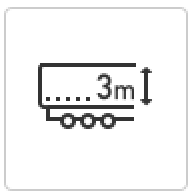
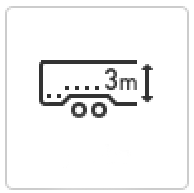
TENT | The most versatile and most frequently selected body type. It enables flexible loading and unloading methods. |
 | CHARACTERISTICS:
|
AVAILABLE SUBTYPES: | |
 |
|
 |
|
 |
|
 |
|
 |
|
 |
|
 |
|
RIGID BODY | A category covering vehicles with a permanent, enclosed wall structure. It provides a higher level of cargo protection compared to a tarpaulin body. |
 | CHARACTERISTICS:
|
AVAILABLE SUBTYPES: | |
 |
|
 |
|
COOLER | A body type intended for the transport of goods requiring controlled temperature. |
 | Additionally, it is possible to specify extra requirements in the freight offer: - additional generator for the reefer - multi-temperature - temperature printout - thermometer CHARACTERISTICS:
|
AVAILABLE SUBTYPES: | |
 |
|
 |
|
 |
|
TIPPER | A body type intended for the transport of loose and bulk materials. |
 | CHARACTERISTICS:
|
AVAILABLE SUBTYPES: | |
WALKING FLOOR (MOVING FLOOR)  | An alternative to the classic tipper. Equipped with a moving floor system that enables horizontal unloading without lifting the body. CHARACTERISTICS:
This solution increases operational safety and enables unloading in more challenging infrastructure conditions. |
TANKER | A body type intended for the transport of liquid and gaseous substances, as well as bulk materials (in silo version). |
 | CHARACTERISTICS:
|
AVAILABLE SUBTYPES: | |
 |
|
 |
|
 |
|
 |
|
 |
|
 |
|
CONTAINER | A body type intended for transporting sea containers and swap bodies. Used in intermodal transport, it enables efficient movement of loading units between different means of transport without the need to reload the cargo. |
 | CHARACTERISTICS:
|
BODY VARIANTS: | |
 | 20’ Tanker - a body adapted for transporting 20-foot tank containers. Application:
Characteristic features:
|
 | 20’ Standard Body for transporting standard 20-foot ISO containers. Application:
Characteristic features:
|
 | 40’ Tanker Body intended for transporting 40-foot tank containers. Application:
Characteristic features:
|
 |
|
 |
|
 |
|
OTHER TRUCK | |
AVAILABLE SUBTYPES: | |
 | LOG TRAILER A specialist vehicle intended for transporting cargo of above-standard length. CHARACTERISTICS:
APPLICATION:
The timber truck is suitable wherever a standard cargo space is insufficient in terms of length. |
 | HOOK TRUCK A vehicle equipped with a hydraulic system for loading and unloading containers using a hook arm. It enables independent handling of containers without additional transshipment equipment. CHARACTERISTICS:
APPLICATION:
|
 | TOW TRUCK A vehicle adapted for transporting cars and other wheeled vehicles or machinery. CHARACTERISTICS:
APPLICATION:
|
 | LOW TRUCK A specialist vehicle intended for transporting oversized loads and heavy machinery. CHARACTERISTICS:
APPLICATION:
Low loaders are used in projects requiring specialist logistics planning. |
 | PLATFORM TRAILER An open body type without fixed walls or roof, or with the possibility of removing them. It provides full access to the cargo space from all sides. CHARACTERISTICS:
APPLICATION:
The flatbed is particularly useful for cargo requiring unrestricted access during loading and an individual securing system. |
 | TRACTOR UNIT A vehicle without its own cargo space, intended solely for pulling a semi-trailer. It is a basic element of long-distance and intermodal transport. CHARACTERISTICS:
APPLICATION:
|
Do you have any comments or notice anything missing in the article? Leave your feedback in the form — your opinion will help us improve the platform’s knowledge base.
